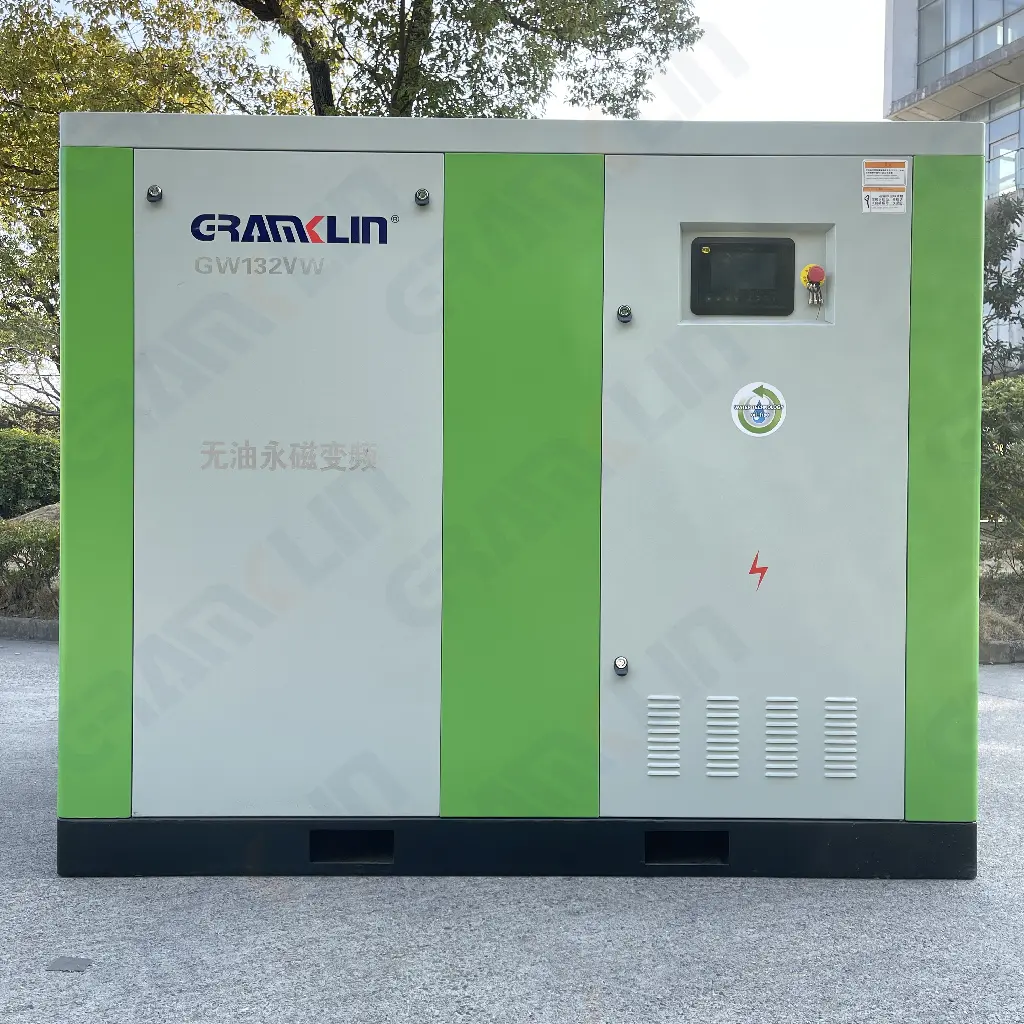
Is there lubricating oil in the oil-free air compressor? Why
Oil-free air compressors usually do not contain traditional lubricants.. This is because the oil-free air compressor is designed to avoid oil pollution during the compression process, thereby providing pure compressed air. The following is a detailed explanation:
definition and working principle of 1. oil-free air compressor
oil-free air compressor is an air compressor that does not produce lubricating oil during operation. It compresses the inhaled air through specially designed mechanical parts (such as pistons, screws or turbines, etc.), and then outputs it as high-pressure gas. During the compression process, these mechanical parts can operate normally without lubricating oil through precise coordination and special design.
Lubrication Method of 2. Oil-free Air Compressor
although oil-free air compressors do not require the addition of traditional lubricants, certain key components (such as bearings and seals) still require proper lubrication to ensure their normal operation and extended service life. These parts are usually lubricated with special grease or solid lubricants, rather than by adding lubricating oil.
Advantages of 3. oil-free air compressor
- pure compressed air since the oil-free air compressor does not produce lubricating oil during operation, the compressed air provided is pure and pollution-free, and is suitable for occasions with high air quality requirements, such as medical, food, electronics and other industries.
- Energy saving and environmental protection: The oil-free air compressor adopts high-efficiency and energy-saving design to reduce energy consumption and operating costs. At the same time, because there is no consumption and discharge of lubricating oil, environmental pollution is also reduced.
- Low maintenance costs: Since the oil-free air compressor does not require regular replacement of lubricating oil and cleaning of the oil circuit system, the maintenance cost is relatively low.
4. special circumstances
it is worth noting that although most oil-free air compressors do not need to add lubricating oil during operation, in some special cases (such as long-term high-load operation or harsh working conditions), it may be necessary to properly lubricate and maintain the key components according to the actual situation. In addition, there are some oil-free air compressors on the market that use special lubrication technology. They may use a small amount of lubricating oil or grease on some parts, but still maintain the characteristics of oil-free compression as a whole.
5. Summary
in summary, oil-free air compressors usually do not contain traditional lubricants. It can operate normally without lubricating oil through special design and lubrication, thus providing pure, energy-saving and environmentally friendly compressed air. However, in special cases or oil-free air compressors with special lubrication technology, small amounts of oil or grease may be used to lubricate and maintain key components.